Succession planning Designing Leadership for the Future, Not Replacing thePast

Why succession planning is important?
Succession planning must evolve from an HR process into a core strategic discipline
embraced by leaders and boards. It is fundamentally about mitigating enterprise risk and
ensuring business continuity both in times of crisis and through planned leadership
transitions. While many organizations treat it as a periodic talent review exercise, its value
lies in real business outcomes: leadership continuity, organizational resilience, and sustained
performance.
Recent research shows stark gaps in practice versus ambition. For example, only about 35%
of organizations have a formalized succession planning process for critical roles, and as few
as 13% feel confident they have the leaders needed for the future. Furthermore, less than
half of incoming CEOs are internal promotions, signalling a lack of successor readiness at
the top of the leadership pyramid.
Defining High Potential (HiPo): What It Really Means
Identifying high potential talent goes beyond performance rankings. High-potential (HiPo)
employees are those who can perform at greater levels than peers, demonstrate rapid
learning agility, and exhibit leadership capabilities for broader or more complex roles. This
typically includes: Performance track record, combined with evidence of leadership flexibility,
Cognitive, emotional, and adaptability competencies, Capacity for rapid development with
exposure to stretch assignments and ambiguity
Research shows that organizations that explicitly define high potential are up to 7× more
effective at planning succession than those that do not. However, many companies struggle
to operationalize this: around 70% fail to correctly identify high-potential employees for
leadership roles, and 45% still lack a structured process for doing so. Common internal
benchmarks based on my experience for HiPo populations range from 5%–15% of the
workforce with many companies targeting roughly 10% as the “sweet spot” for practical
leadership pipelines.
People Readiness: Prioritize Actual Preparedness, Not Just Identification
A critical distinction in effective succession planning is readiness: the extent to which
identified successors can step into a role today versus in the future. Typical readiness
categories used by leading organizations include: Ready now can assume the role
immediately with minimal transition support / Ready in 1–2 years with focused development
or stretch assignments /Ready in 3–5 years where longer-term development is required
Top-quartile performers in succession maturity achieve up to 85% coverage of critical roles
with successors ready across these horizons, compared with only 35% for lower performers.
They also deliver internal fill success rates as high as 87%, dramatically reducing time-to-fill
and operational disruption when compared to less mature peers.
This kind of readiness requires far more than a tick-box exercise . it requires rigorous
assessments, evidence-based development plans, and progressive role experience that
reflects future role demands. Indeed, a core pitfall in many organizations is measuring

Classification – FOR INTERNAL USE
ONLY

process completion (e.g., “90% completed development actions”) rather than true capability
progression toward strategic needs.
Success Rates: The Reality Check
Despite widespread awareness, the effectiveness of succession planning remains low: Only
18% of organizations feel their leadership pipeline is ready to meet future needs. More than
50% of organizations lack a contingency plan for unexpected CEO departure. 92% of board
members are satisfied with current CEOs, but only 37% are satisfied with succession
planning.
When viewed as leaders stepping into planned roles (e.g., internal successor movement),
research suggests actual success rates are often below 25% underscoring the disconnect
between planning processes and real outcomes. However, companies that have integrated
succession planning with strategic goals and capability criteria consistently outperform peers
exhibiting higher revenue growth, retention of top talent, improved agility, and stronger
shareholder returns.
Ownership and Governance
Because succession planning is fundamentally about business outcomes, it should be
owned by leaders and boards, not delegated to HR. The role of the CHRO is critical but as a
facilitator, challenger, and guardian of process rigor, rather than the primary owner of
succession decisions.
From People-First to Business-First: A Capability-Driven Approach to Succession
To meaningfully improve both leadership readiness and long-term succession success rates,
organizations need to move beyond traditional, people-first succession planning and adopt a
business-first, capability-driven approach. Too often, succession decisions are shaped by
familiarity, tenure, or how closely a potential successor mirrors the current incumbent. While
experience and performance remain important, they are not sufficient in a rapidly evolving
business environment. A recent webinar from Russell Reynolds, drawing on the lived
experiences of senior Chief People Officers, reinforced the urgency of this shift: succession
planning must be anchored in future business needs, not past role definitions.

  1. Start with strategy
    Effective succession planning begins with a clear understanding of where the
    organization is headed. This means aligning to strategic objectives over the next
    three to five years across the enterprise, specific functions, and business units.
    Leaders should ask: What markets are we entering? What capabilities will
    differentiate us? What transformation is required? Without this forward-looking lens,
    succession becomes a backward-looking exercise.
  2. Identify capability gaps
    Once the strategy is clear, the next step is to define the capabilities required to
    deliver it. This requires moving beyond job descriptions and focusing on critical
    experiences, leadership behaviours, technical expertise, and cognitive agility.
    Importantly, this step should not center on what the current incumbent did well, but
    rather on what the future role will demand. In times of disruption, the next leader may
    need a very different profile than the current one.

Classification – FOR INTERNAL USE
ONLY

  1. Map capabilities to talent
    With required capabilities defined, organizations should use robust, data-informed
    assessment methods to identify individuals who demonstrate evidence of those
    future-oriented capabilities. This may include performance trends, potential
    assessments, behavioral interviews, 360 feedback, and psychometric tools. The goal
    is objectivity and alignment with strategy, reducing bias and increasing the likelihood
    of successful transitions.
  2. Develop with purpose
    Succession planning is not only about selection; it is about intentional development.
    High-potential leaders should receive targeted experiences that build the capabilities
    identified as strategically critical. This can include cross-functional rotations, stretch
    assignments, exposure to enterprise-level decision-making, international placements,
    or leading transformation initiatives. Development should be deliberate and linked
    directly to future business requirements.
    By adopting this business-first, capability-driven model, organizations increase the
    probability that successors will not only step into roles smoothly but also accelerate
    performance once there. Rather than selecting leaders who resemble today’s incumbents,
    this approach ensures that tomorrow’s leaders are equipped for tomorrow’s challenges.
    Transparency: To Tell or Not to Tell?
    A recurring question in succession planning is whether individuals identified as potential
    successors should be informed.
    While transparency is generally a positive leadership principle, I do not support explicitly
    disclosing succession status for critical roles, for two main reasons:
  3. False expectations and retention risk. Given that fewer than one in four succession
    plans materialize as intended, disclosure can create expectations that may not be
    fulfilled, increasing disengagement or attrition if plans change.
  4. Strategic sensitivity. Succession planning is intrinsically linked to corporate strategy
    and future leadership choices, making it sensitive information that should remain
    within the CEO and boardroom.
    For these reasons, succession planning should remain a CEO- and board-owned
    business process, managed with discretion and discipline, while still ensuring that high-
    potential leaders receive meaningful development, exposure, and growth
    opportunities—regardless of whether they are formally designated as successors
    Conclusion: Leadership Continuity Is a Strategic Discipline
    Succession planning is not an HR initiative, nor a theoretical exercise in talent mapping. It is
    a core leadership and board accountability, directly linked to enterprise risk, strategic
    execution, and long-term value creation. Organizations that treat it as a compliance activity
    or a once-a-year discussion consistently fail to translate plans into outcomes.
    The evidence is clear: without a future-oriented view of strategy, rigor in defining leadership
    capabilities, and disciplined development of readiness, succession plans remain fragile. Low

Classification – FOR INTERNAL USE
ONLY
success rates are not a failure of talent they are a failure of ownership, courage, and
strategic clarity.
High-performing organizations approach succession planning as an ongoing business
discipline. They place the future of the enterprise ahead of short-term comfort, accept
calculated risk in developing internal leaders, and make deliberate bets on potential rather
than waiting for perfection. In doing so, they dramatically increase leadership continuity,
accelerate decision-making, and protect organizational value at moments that matter most.
Ultimately, the quality of succession planning is a direct reflection of leadership maturity.
Boards and CEOs who own this agenda with HR as a rigorous facilitator send a clear signal:
the future of the business is being actively built, not passively hoped for.
Table of contents

Scroll to Top

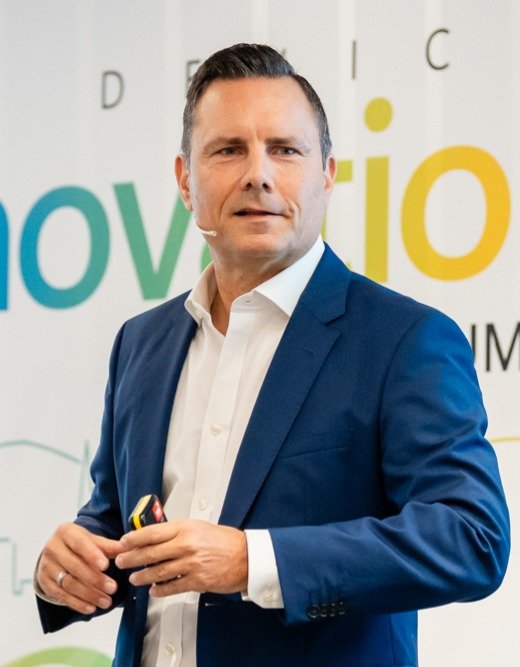
Jean Luc Giraud

Managing partner and chairman of the board

A global human resources and business C-suite Leader with a combined business management and broad human resources expertise. Having worked and lived internationally, with multinational large and mid-size companies experiences developed across several industries, FMCG, retails, Healthcare & pharmaceutical, luxury, automotive and energy including best practices gained in General Electric, Novartis and Mercedes-Benz. Jean-luc worked several years as a member of the management team in PE (Bain Capital) back up company.

Driving substantial changes through growth plans, operational effectiveness, multiple integrations following acquisitions, entry & development into emerging markets. Creating short and long terms value by addressing people challenges such as Global cultural and business Transformations, talent acquisition, organization development, leadership, performance management, C&B, Employee relations, HR operations.   Having held significant budgets and leading global teams in complex matrix organizations, focusing on both strategic and operational excellence.  Passionate by talent Management and people growth.

Jean-Luc is an alumni from the Ecole Superieure des affaires-University Grenoble II (France)  with 2 post MBA degrees Magistere of business management and DESS of management information system – He is also an alumni from ESSEC Business school (France) with a specialized HR program  and Manheim University (Germany) with an Executive MBA.  He has also completed various short terms programs at Stanford university (USA) – Sloan Business school (USA) – INSEAD (France)

Frédéric Giraud

Senior logistics partnership manager

Frédéric is a multilingual logistics professional with hands-on experience in last mile delivery, supply chain optimization, and 3PL operations across Europe. He currently serves as Senior Logistics Partnership Manager at Westwing, where he oversees logistics strategy and carrier partnerships across DACH, BENELUX, and France.Prior to Westwing, Frédéric held multiple leadership roles at Amazon Logistics, including Delivery Operations Manager and On-Road Manager, where he directed large-scale delivery networks, led regional cost optimization initiatives, and supported multiple country and station launches across Germany, the Netherlands, and Luxembourg.

He is Lean and Kaizen certified, with a strong track record in vendor negotiations, cost savings, and sustainable logistics practices.

His experience spans e-commerce, retail, and tech-driven logistics environments, with a focus on operational excellence and continuous improvement.

Frédéric holds a Master in International Management from EADA Business School in Barcelona and a Master in Change Implementation & Disruptive Technology from Universitat Internacional de Catalunya. He is fluent in French, German, and English, with working proficiency in Spanish

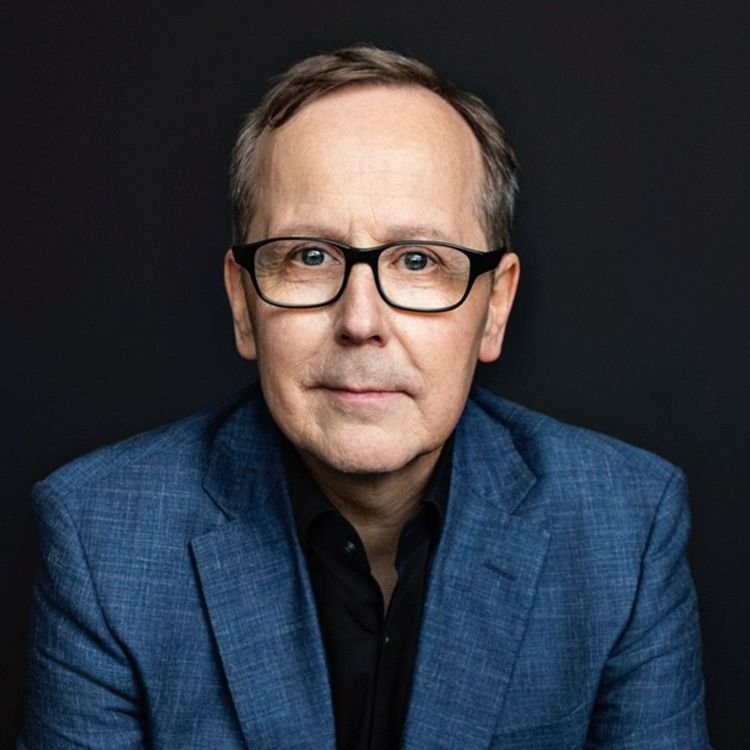
Matthias Scharer

Chief operating officer for Microsoft Device Partner Sales EMEA and strategy and marketing leader for AI and cloud transformation at Microsoft

Matthias is technology executive with 25+ years of experience leading strategic growth, transformation, and innovation across global markets. As COO and Head of Strategy & Marketing for Microsoft Device Partner Sales EMEA, I drive regional execution across Marketing, Category Management, and Operations—accelerating AI adoption, hybrid infrastructure, and next-gen device deployment.

I lead a high-performing organization focused on aligning Microsoft’s investment strategy with customer needs, enabling digital transformation at scale, and unlocking value through intelligent edge and cloud services. Passionate about building future-ready teams, I combine strategic foresight with operational excellence to deliver impact across diverse industries and partner ecosystems.

Previously held senior sales leadership roles at Microsoft and Intel, with deep expertise in enterprise sales, vertical industry transformation, and partner strategy across Europe.

Matthias is hold a master of Engeering – Diploma Civil engineering from the Technical University of Munich and an MBA from Mannheim and ESSEC Business schools as well as a certificate from Insead in Management acceleration program.  

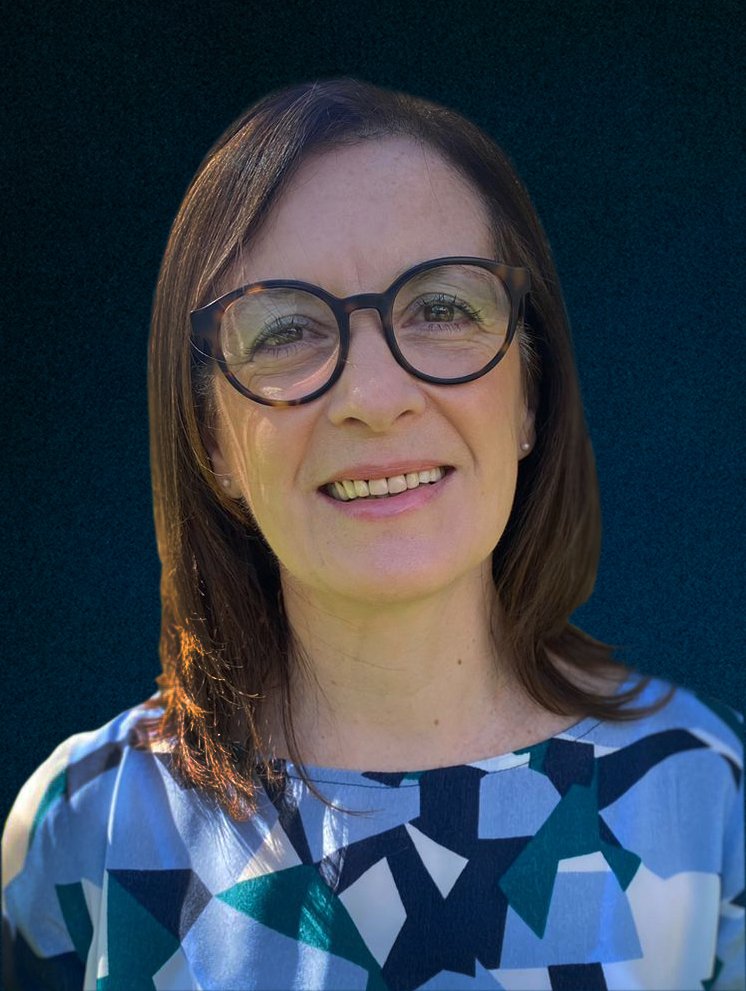
Cecilia Rodriguez

Founding partner and managing director of Sollertia in Argentina

Cecilia is an executive coach and consultant with over 20 years of experience in human behaviour and organizational development. Since founding Sollertia in 2004, she has partnered with more than 600 clients across Latin America and internationally, guiding leaders and organizations through processes of change, growth, and transformation. 

She is also Co-Founder of Avvartes International, a Switzerland-based network that amplifies leadership and organizational evolution programs across 16 countries. 

Certified Executive Coach by the Center for Creative Leadership, she has supported leaders at different organizational levels—CEOs, Presidents, Regional Heads, Vice Presidents, and Directors—across industries such as banking, telecommunications, pharmaceuticals, agribusiness, energy, logistics, and beverages & spirits, in regions from Latin America to the U.S., Europe, and Asia. 

Rooted in experiential learning and inspired by her lifelong connection with mountaineering, Cecilia brings a distinctive perspective to her facilitation and coaching: insight-driven conversations that help leaders unlock clarity, strengthen decision-making, and move forward with focus and confidence. 

She designed the R4G – Resilience for Growth Program with five global colleagues, delivering it for women leaders in open cohorts in the U.S., Europe, Asia and Latin America (2019–2023). From this initiative, “daughters’ programs” were created in-company for SIG (Global), MSD (Latin America) Akbank (Turkey), YPF and Banco Galicia (Argentina).

Christian Neubert

Leader of the Human Edge consulting firm and senior executive and transformational leader

Christian Neubert is a senior executive, transformational leader, and a trusted advisor to C-level executives for major businesses. He is also an expert in cultural transformation. Christian’s interactions with clients are insightful and provocative. He contributes experience from a multitude of countries, in a wide array of industries including pharmaceuticals, technology, banking, and broader life sciences. 

He specialises in defining strategic vision, leading and managing change, and executing to deliver against expected results. Wherever he goes, he cultivates innovation and demonstrates a global perspective, to deliver high performance across multiple cultures and markets. 

Christian’s focus on advanced analytics solutions includes Strategic Workforce Planning, allowing senior leaders to take impactful decisions resulting in more agile organizations for today and in the future. 

He is dedicated to successfully building and enabling organizations to build internal game-changing capabilities that have long-lasting business impact. Christian holds a master’s degree in Organizational Psychology from the University of Freiburg (Germany), and a bachelor’s degree in Economics. In his free time, he spends time with his family and friends, skiing, and traveling around the world. 

What clients can expect from Christian: 

His thoughtful, probing approach coupled with his strong business acumen focuses individuals and teams on the behaviours and actions required to achieve results, whether setting strategic direction, leading transformational change, or achieving exceptional performance.

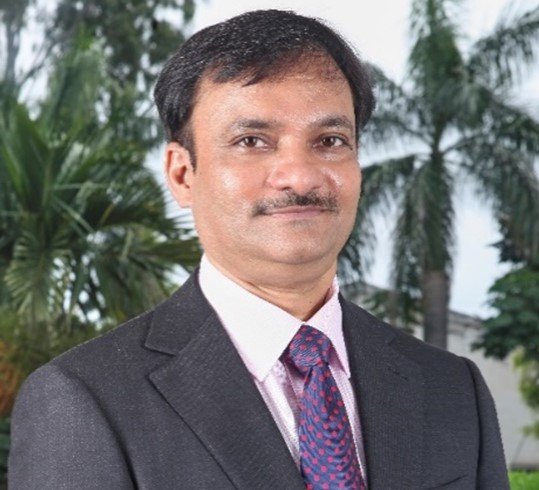
Devvesh P. Srivastav

Country president and HR director APAC at Centrient Pharmaceuticals in India

Devvesh P has an enriched experienced of three decades in various Global, Regional & Local organizations in People & Business Management across Pan India, Asia, Europe & North America. Been on panel of key industry forums like IGCTC, NIPM, IISPI, OPPI & EFI. A post-graduate in HR Management & Employee Relations, Lawyer by training & Graduate in Tax with Chartered Accountancy Inter.

Devvesh is an inspiring leader who has a proven track record to transform, build, Co create and integrate high performing teams to achieve goals. He is currently based out of Gurgaon, Delhi NCR where he is working as Country President & Global & Regional HR Head for Global Tech Ops and Asia Region and a Board Member, Occupier under the Indian laws on compliance. Before he was working as Head HR & Corporate Services function with a Canadian MNC – Apotex and part of the Global HR Leadership Team having a GCC – Shared Service Centre in Mumbai.

Prior to Centrient & Apotex, he was with Sun Pharma as Corporate & Manufacturing HR Head, he advanced to become the Global HRBP for Sun Pharma with a responsibility of 10,000+ People role and was heading the Formulations business as AVP – HR & Admin. During his stint with Sun Pharma, Devesh has spearheaded the landmark integration of Sun – Ranbaxy & successfully completed the integration of GSK Opiate business of Australia with Sun.

At Teva, he was Sr. VP – HR & Admin and was responsible for the building One Teva – One Team. Previously he played significant role in transforming Merck in India while he was VP – HR & Corp Admin for Merck Group of Companies as HR Head for more than 12 Years. During his stint he has did multiple integration, Merck Millipore, Bangalore Genie & Merck Serono & also worked at Merck HQ in Germany and was responsible for 7 APAC countries in his regional responsibility. In addition to his HR professional exposure, he has successfully established 2 Major CSR Campaign MICT (Merck India Charitable Trust) – Adoption of Talent & IGNITE in Apotex – Initiative for Talent for underprivileged students in BLR & Mumbai and currently supporting a Centrient CSR campaign where he is passionately driving multiple projects touching 60,000+lives every year.

Devvesh P have worked across regions of India and did Global assignment in Germany/Frankfurt and lead South East Asia seven countries in his Regional Roles and exposed to multiple complex projects working with great minds and Organizations like McKinsey , EY, PwC , Bain , KPMG and known for working many business transforming assignment in his tenure and supporting start Up network while awarded as TOP 100 HR Mind , Best 100 HR Leaders, won accolades for his companies in Best Employers study in 2014 and 2018.

Belongs to a defence family background, Wife Mohini, an IT Professional and now a Home Maker & his son Divynsh is a professional Architect.

Certification Programmes & Key Leadership Engagements:

  • Certified trainer for different programs in Leadership & Management Development.
  • Certified trainer for “Insights” a behavioural program by Insights Discovery, Berlin
  • Certified trainer for coaching skills and NLP by David Ross, Performance Unlimited, UK.
  • Certified Assessor for Leadership Profiling by Merck KGaA.
  • Certified for Hogan Assessment – Three Fish
  • Performance Management System IIM – Ahmedabad
  • Certificate Course in “Regional Talent Training” at Singapore/Shanghai/Mumbai
  • Executing Coaching Skills & NLP Techniques – by Performance Unlimited UK
  • Merck Leadership Curriculum Certification – I, II, III & IV
  • 360 degree feedback program – by SHL.
  • Critical skills for Managers – by Andrew Bryant of “Self Leadership”, Singapore.
  • Gold Medallist in “Innovation Workshop” at Frankfurt
  • Persuing his ACC/MCC from Coachraya & ICF

Brigitte Schraetzenstaller-Rauch

Head of organization and administration at Vedra Pension and co founder of Great People Consulting

About Great People
Founded in 2014, Great People brings together a team of highly experienced practitioners with outstanding consulting and coaching qualifications and a proven track record across industries and leadership levels.
The team combines solid business backgrounds with deep human understanding – bridging strategy and people, structure and empathy. With decades of international experience in corporate, SME, and start-up environments, Great People consultants work pragmatically, strategically, and with a deep belief that successful transformation starts with people who feel connected to what they do.

About Brigitte
Brigitte combines systemic coaching and mediation expertise with extensive leadership experience in multinational corporations and start-ups. Her career includes positions at Roche, Oracle, Novartis, and Bilfinger, giving her a profound understanding of organizational dynamics, leadership challenges, and cultural diversity.
As a former Managing Director in the start-up sector, Brigitte brings a hands-on approach to business transformation and organizational development. She supports executives and teams in gaining clarity, aligning strategy and culture, and leading change with confidence and empathy.

Her Focus Areas
Executive Coaching Brigitte coaches C-level leaders, senior managers, and leading professionals to enhance their effectiveness and leadership impact.
Focus topics include:
• First 90 Days onboarding and leadership transition
• Executive Presence and authentic leadership, especially for female senior leaders
• Self-effectiveness, management, and career development strategies

Start-up Consulting
Drawing on her own executive experience in start-up leadership, Brigitte supports founders and early-stage companies in building sustainable structures and growth strategies.
Typical consulting areas:
• Pitch coaching to create compelling, investor-ready presentations
• Business development and Go-to-Market strategies
• Company building and scaling from concept to execution

Executive Consulting & Organizational Development
Brigitte advises organizations in strategy, change, and leadership development, enabling transformation with clarity, empathy, and measurable results.
Key project experience includes:
• Company strategy development and rollout in Healthcare, IT, and Service industries
• Design and global rollout of a Human Resources Strategy in the service sector
• Development and implementation of a “Sales Academy” for an intern. printing company
• Teambuilding and leadership alignment workshops for global finance teams in the
pharmaceutical industry

Global Projects & HR Expertise
Her international project portfolio includes:
• Development of Global HR strategies and implementation of an international Diversity & Inclusion strategy
• Development of Global Leadership Programs for multinational organizations
• HR Interim Management for a leading pharmaceutical company – including business
partnering with global business units and facilitating change management & coaching skill workshops for leadership teams

Facilitation & Events
Her passion lies in inspiring groups, fostering active and interactive collaboration, and creating lasting impact.
• Facilitates engagement from small teams to large organizations, ensuring every
participant is involved
• Designs and leads kickoffs, trainings, and bootcamps that spark creativity and
collaboration
• Creates experiences that leave participants inspired, motivated, and talk about the impact years later

In a nutshell
Brigitte is a pragmatic, inspiring, and results-driven consultant – credible in the
boardroom,empathetic in personal interaction, and deeply committed to sustainable
transformation.
She believes that organizations thrive when people are aligned, motivated, and connected.

Alexandra Zhao

Senior Consultant of Zhonglun W&D Law Firm. Visiting scholar of Columbia Law School 2025-2026

Ping ZHAO (Alexandra) is a Senior Consultant at Zhonglun W&D Law Firm and a Visiting Scholar at Columbia Law School. With over twenty years of experience spanning the judiciary, corporate, and private practice sectors, she has gained extensive experience advising multinational corporations on international arbitration, cross-border mergers and acquisitions, and global trade compliance.

Before entering private practice, Ms. Zhao served as Global Risk and Compliance Director and China Legal Head at Centrient Pharmaceuticals, a Bain Capital portfolio company headquartered in Rotterdam, the Netherlands, where she established comprehensive global compliance frameworks covering anti-corruption, export controls, ESG, and data privacy. Earlier, she was Senior Legal Counsel at China National Offshore Oil Corporation (CNOOC), managing complex international disputes and investment arbitration cases across the United States, the United Kingdom, and Africa.

Ms. Zhao began her legal career as a judge assistant at the Beijing Haidian District Court and was later promoted to Acting Judge. She also worked with The Asia Foundation on legal reform initiatives in China. She currently serves as Vice Secretary-General of the China International Investment Arbitration Forum and Director of the China Modern Enterprise Research Association.

She holds an LL.M. in Commercial Law from the University of Bristol, an MBA from Tsinghua University, and a B.A. in English from the China University of Political Science and Law.