
Uncategorized

Leading When the Path Ahead Is Unclear

Uncertainty has become an inescapable companion of modern leadership. Manyleaders today operate in environments shaped by economic volatility, geopolitical pressures,sudden policy shifts, and corporate transformations such as restructurings, mergers, ordivestitures. Often there is no clear roadmap, no detailed timeline, and sometimes not evenfull visibility into the forces shaping tomorrow.Yet leaders are still expected to deliver, to protect performance, and to guide teams who lookto them for orientation and reassurance. It is a demanding paradox: to create stability in aworld that offers very little of it.True leadership reveals itself not when conditions are predictable, but when thefuture is blurred and the context is volatile. It begins with the ability to remain grounded whileeverything around appears in motion. It begins with leaders understanding their ownemotional landscape, managing their energy, and cultivating resilience not as an act ofheroism, but as a disciplined and conscious practice.Resilience is not about pretending to be unshakable; it is about being adaptable. It isthe quiet confidence that one can bend without breaking, the willingness to face realitywithout losing hope, and the discipline to keep moving even when clarity is scarce. Resilientleaders recognise their own stress signals and adjust with intention. They nurture theirmindset, their physical wellbeing, their energy, and their recovery as interconnected pillarssupporting their ability to stay present, intentional, and calm under pressure.But leadership in uncertainty extends far beyond the individual. It is also about howleaders bring people together at a time when uncertainty tends to isolate. Doubt can erodeconnection and amplify fear. Leadership repairs this by fostering trust, strengtheningrelationships, and creating space for open conversations. When people feel seen andsupported, they rediscover their collective strength. When they feel safe to express theirconcerns, they contribute more ideas, take more initiative, and stay more engaged.Communication becomes the leader’s most powerful tool. In turbulent times,employees do not expect their leaders to possess all the answers, but they do expecthonesty, empathy, and presence. Silence fuels anxiety; clear communication reduces it.Leaders who openly acknowledge what is known and what is still unknown demonstratecourage and build credibility. Transparency becomes a source of psychological stability.Empathy becomes a source of human connection. When combined, they help people stayfocused, confident, and aligned even when the future remains unsettled. When Uncertainty Becomes Visible: Signals That Leaders and Employees AreStruggling Uncertainty does not only change strategy; it changes human behaviour. And beforepeople articulate their discomfort, they often express it through subtle signals that attentiveleaders can observe.Employees may begin to withdraw from conversations, participate less actively inmeetings, or hesitate to take initiative for fear of making the wrong move. Productivity mayfluctuate, not because of capability, but because mental preoccupation drains cognitive energy. Informal networks may weaken, and small misunderstandings may escalate morequickly than usual. You may observe rising cynicism, humour that masks anxiety, or anoticeable increase in escalations as people seek clarity they no longer feel empowered toresolve themselves.Leaders, too, show signs of strain. Some become overly rigid, clinging to control inan attempt to create certainty where none exists. Others may become less decisive,delaying choices because they fear missteps. Some leaders lose their habitual warmth,shifting into a more transactional mode of management simply to keep things moving. Andsome retreat into silence, believing they have nothing to say until clarity arrives unaware thattheir silence creates even more anxiety among teams.These signals are not signs of weakness; they are human indicators of psychologicaloverload. Recognising them early allows organisations to intervene with empathy, clarity,and support before disengagement takes root. The Unique Responsibility of the CEO In moments of deep uncertainty, the CEO holds a particularly symbolic andoperational role. The organisation looks to the CEO not only for strategic direction but alsofor emotional steadiness. More than any other leader, the CEO sets the tone, shapes thenarrative, and embodies the organisation’s resilience.A CEO must illuminate the vision at times when others struggle to see it. This visiondoes not need to be overly detailed or perfectly defined, but it must be purposeful. It mustexplain where the organisation is heading, why it matters, and how people can contribute toit. In uncertain times, a compelling and coherent vision becomes a stabilising force, acompass that helps teams maintain perspective and a sense of meaning.Presence is equally essential. A visible CEO walking the floors, listening, answeringquestions, engaging in dialogue becomes a source of reassurance. Visibility signalscommitment. It shows that the CEO is not detached from the challenges but walking throughthem alongside the organisation. When the CEO embodies calm resilience, others follow.When the CEO demonstrates openness, transparency spreads across the leadership chain.And when the CEO shows courage, the organisation draws strength from that example. CEO’s Direct Reports must embrace fully CEO messages and act withAuthenticity If the CEO is the organisation’s anchor during uncertainty, the executive leadershipteam (the CEO’s direct reports) are the stabilising bridge between the vision at the top andthe lived reality throughout the company. Their role is not merely to cascade messages; it isto embody the leadership culture the organisation needs.Authenticity becomes their most powerful tool. Employees quickly sense when seniorleaders do not believe in the messages they share, or when they are projecting confidencethat feels artificial. Authentic executive leaders acknowledge challenges without dramatizingthem, express confidence without pretending to have all the answers, and speak frompersonal conviction rather than rehearsed corporate language.Their behaviour creates cultural alignment. When executive leaders visibly supportthe CEO’s direction, the organisation aligns. When they remain present, available, and connected to their teams, the organisation feels held. When they uphold transparencysharing what they know, what remains uncertain, and how they are working toward claritythey reinforce trust at every layer of the company.In times of uncertainty, employees assess leadership not only on competence, but oncongruence. Do words and actions match? Do leaders embody what they ask of others?Authenticity turns senior leaders into anchors rather than amplifiers of anxiety How HR Can Support Leaders and Employees ? Human Resources plays an indispensable role in helping organisations navigateuncertainty. HR becomes the stabiliser, ensuring that leaders are equipped, employees aresupported, and communication remains aligned. When uncertainty threatens to fragment theorganisation, HR helps keep it connected.HR can

Leading When the Path Ahead Is Unclear Read More »

Rethinking Travel Policies: From Cost Control to a Lever for Wellbeing and Retention

Recently, I was told two stories that made me reflect on how companies design and applytheir travel policies, and more broadly on what those policies signal about culture, trust, andpriorities.The cases :The first story involved a young talent sent abroad to a major city for an important executivemeeting. The company recommended a specific hotel group, but the available rate exceededthe internal budget by three euros per night. The employee requested an exception. It wasrefused. To comply with policy, he booked a cheaper hotel outside the city. This resulted inlong taxi rides to attend meetings. In the end, taxi costs exceeded the original difference.The situation deteriorated further when the hotel check-in failed, forcing him to call customerservice to gain access to his room. The total cost for the company increased, time was lost,and unnecessary stress was created before a key meeting. More importantly, a youngemployee began questioning the logic and flexibility of the organization.The second story concerned a C-level executive asked to take an intercontinental flight ineconomy class. The company was performing well, but business and premium economywere outside policy. In principle, that is a legitimate company decision. However, thisexecutive had known back problems that made long-haul travel without a reclining seatphysically difficult. He raised the issue with his manager and HR, requesting an exception. Itwas denied. Eventually, he had to obtain a medical certificate in order to book a business-class ticket at the last minute. This increased costs and administrative burden. Beyond thefinancial impact, the message he received was that policy compliance outweighed trust andcommon sense. For a senior leader, that perception is not neutral.The game has changedSince the end of 2021, business travel has decreased significantly. Communicationplatforms such as Zoom Video Communications, Microsoft and Cisco have become standardtools. At the same time, sustainability goals and carbon footprint reduction have rightlygained importance.Travel remains, however, a significant cost category. For many CFOs, it appears to be one ofthe few expense lines that can be tightened year after year. Better tracking systems, stricterapproval processes, narrower class eligibility these measures are often introduced in thename of discipline.Commercial and marketing teams tend to see things differently. Even in a more data-drivenworld, relationships still matter. In many industries and cultural environments, physicalpresence builds trust in ways that digital tools cannot fully replicate. Video conferences areefficient for follow-up and coordination, but they do not always replace the depth of in-personengagement.The outdated prejudiceThere is also a persistent misunderstanding: some still consider business travel a privilegeor a reward. That perception no longer reflects reality. Today’s business trips are short,intense, and highly focused. In Europe, for example, many involve early departures and latereturns on the same day. Agendas are dense, expectations high, and informal time limited. Classification – FOR INTERNAL USEONLYCompliance rules have increased while allowances have often been reduced. Travel hasbecome more professional, but also more demanding.The impact of travel on employeeThis is where wellbeing enters the conversation. Travel affects sleep, nutrition, stress levels,and physical health. Long-haul flights disrupt biological rhythms. Early departures and latereturns reduce recovery time. Repeated exposure to such conditions without adequateconsideration accumulates fatigue. When policies ignore these human factors, they createsilent costs: reduced performance, increased irritability, health deterioration, and eventuallydisengagement. A travel policy is therefore not just a financial instrument. It is a contributorto employee wellbeing. Or it can be a detractor.Is one size fit all policy the answer ?Most companies differentiate policies by hierarchy, function, or geography. Somedifferentiation can be justified. Senior leaders often have compressed schedules and areexpected to perform immediately upon arrival. However, the human body does notdifferentiate by title. A long intercontinental flight impacts a junior manager and an executivein similar physiological ways. Personally I can support some differentiation based onhierarchical levels due to the fact that travel at senior level can be shorter and people mustbe immediately plug and play when landing. However when it goes to from office or backoffice roles or countries differentiations, the rational for me is far less obvious and I wouldrather recommend to treat everybody in the same manner when it goes to transcontinentalmoves and keep specific on domestic policy factoring then the cola differences.If travel policy is perceived as rigid, unfair, or disconnected from real working conditions, iterodes trust. Employees may not resign because of a seat category or a hotel budget. Butthese decisions accumulate. They shape how employees feel about the organization’srespect for their comfort, health, and judgment. In many cases, travel policy becomes thelast drop in a broader disengagement process.The benefit of an effective travel policyConversely, a well-designed travel policy can act as a retention tool. When employees seethat the company balances cost control with common sense and health considerations, itreinforces psychological safety. When exceptions are handled pragmatically rather thanbureaucratically, it strengthens trust. When the total cost of a decision including productivityand wellbeing is considered, the organization behaves rationally, not mechanically.Corporate wellbeing is not limited to gym memberships or wellness programs. It alsoincludes everyday operational choices. A policy that saves small amounts but generatesfrustration, medical consultations, last-minute rebookings, and reduced commitmentultimately harms the organization’s wellbeing. It creates hidden friction in the system.On the other hand, a policy that supports reasonable comfort for long-haul travel, proximityto meeting locations, and transparent exception processes contributes to sustainedperformance. Employees arrive prepared rather than exhausted. They feel trusted ratherthan controlled. They focus on delivering results instead of navigating constraints. Classification – FOR INTERNAL USEONLYThe objective is not unlimited flexibility. Cost discipline remains essential. But disciplineshould be intelligent. Travel policy should optimize total value, not only visible expense lines.It should support health, performance, and engagement not undermine them.In a competitive talent market, companies increasingly compete on culture and experience.Travel policies may seem like operational details, yet they send powerful signals. Theycommunicate whether people are viewed primarily as costs or as contributors whosewellbeing matters.In that sense, travel policy is more than an administrative framework. It is a strategic lever.Properly designed, it supports employee wellbeing and, by extension, company wellbeing.Mishandled, it does the opposite.The real question is therefore not how much can be saved on travel each year.

Rethinking Travel Policies: From Cost Control to a Lever for Wellbeing and Retention Read More »

Board Structures at a Crossroads: Enter the Second Revolution!

Institutional Investors, private equity, family office and owners are looking for havingin place “performing board” meaning, beyond representing and protecting their interests,setting the company’s direction and ensuring strong governance, overseeing and supportingthe CEO while holding leadership accountable, monitoring performance and ensureslongterm value creation.The First Revolution: Diversity Became a Corporate Governance ImperativeThose boards for long time were not diverse. Boards were long homogenous, bothdemographically and cognitively. Investors and society eventually recognized that this lack ofdiversity limited oversight quality, reduced perspective variety, and increased groupthink risk.Then the investors and owner realized that their boards needed to represent more thediversity of the society and of the workforce to better understand the dynamic of the worldsaround their businesses. Boards began acknowledging the need for more diversity around2017, driven by investor pressure from groups like State Street, Vanguard, and BlackRockcalling for more women on boards. Momentum accelerated after 2020 with U.S. socialmovements and regulatory actions like California’s diversity laws and Nasdaq’s disclosureand “comply or explain” requirements. In Europe, the push came earlier and was moreregulatory: the EU required companies to have 40% women among nonexecutive directorsor 33% among all directors by 2026, driving faster gender diversity progress than in the U.S.The rationale across regions was similar: diverse boards bring better perspectives, reducegroupthink, strengthen governance, and improve transparency and accountability.Overall, societal pressure, investor expectations, and regulatory action especiallystrong in Europe made board diversity a core part of modern corporate governance. Nowwith the ESG standards and reporting the requirements and visibility will be even strongerThat was the first revolution concerning the structure of the board.Looking at Today’s Boardrooms: What Do We See?Despite progress on diversity, the professional backgrounds of board membersremain strikingly homogeneous. Most boards are still populated by: Former CEOs, FormerCFOs Often from the exact same industry. At first glance, this seems logical. Familiarity withthe sector can accelerate understanding and facilitate productive debates with executives.But three issues deserve careful consideration. Classification – FOR INTERNAL USEONLY Experience matters but outdated experience can be dangerous. Classification – FOR INTERNAL USEONLY continuity risks related to leadership pipelines or succession. However, the skills on boardsoften do not match the human capital oversight they are expected to provide: Boards areexpanding oversight into human capital, culture, talent, AI impact and workforce risks, butvery few directors have HR expertise. Leadership and manager development with AI is nowthe 1 priority for HR leaders globally, reflecting increasingly complex workforce challengesthat boards also need to understand. Nearly all CHROs globally plan to strengthenorganizational culture, acknowledging its centrality to performance yet boards rarely havethe expertise to challenge or guide this. And yet, HR professionals occupy less than 2% ofboard seats today, a striking mismatch given how central people are to strategy executionand long-term value.Why HR Must Be on the Board: The Value CaseA modern board cannot credibly govern a company without deep insight intoworkforce dynamics, especially when: Employee burnout is widespread, with over 40%reporting high levels of stress. ] Employee experience and culture stagnation are major risks,with only 60% of employees feeling the right people are recognized for their effortsLeadership pipelines are shrinking, with half of Gen Z avoiding middle management roles.Trust is declining, with employee trust dropping sharply in multiple regions. Boards withoutHR expertise struggle to ask the right questions, evaluate organizational health, or foreseepeoplerelated risks that jeopardize strategy.In contrast, a Chief People Officer on the board brings among other points: Expertise in culture, leadership, and succession, critical to continuity and strategy. Understanding of workforce risks, now recognized as governance issues. Datadriven insight into engagement and organizational performance. Ability to translate organizational signals into strategic implications A people-first lens in discussions dominated by financial and operational metrics.The Second Revolution: Make HR a Standard Board Competency, appoint moreCHROsAfter improving gender and demographic diversity on boards, the next step is todiversify professional expertise and the most urgent gap is human capital. Given theoverwhelming evidence that people are the primary drivers of both success and failure, HRleaders must move from occasional presenters to full board members.Today, with HR professionals making up less than 2% of board directors, we are leaving acritical dimension of governance unaddressed.It is time to correct that.Conclusion :If the first revolution made boards look more like society being more diverse, the secondrevolution will make boards think more like the organizations they govern. Strategy is writtenin the boardroom but it is executed by people. Until boards bring human capital expertise tothe table, they will continue to oversee the future with only half the instruments required tonavigate it. The companies that win the next decade will be those whose boards finally put

Board Structures at a Crossroads: Enter the Second Revolution! Read More »

Succession planning Designing Leadership for the Future, Not Replacing thePast

Why succession planning is important?Succession planning must evolve from an HR process into a core strategic disciplineembraced by leaders and boards. It is fundamentally about mitigating enterprise risk andensuring business continuity both in times of crisis and through planned leadershiptransitions. While many organizations treat it as a periodic talent review exercise, its valuelies in real business outcomes: leadership continuity, organizational resilience, and sustainedperformance.Recent research shows stark gaps in practice versus ambition. For example, only about 35%of organizations have a formalized succession planning process for critical roles, and as fewas 13% feel confident they have the leaders needed for the future. Furthermore, less thanhalf of incoming CEOs are internal promotions, signalling a lack of successor readiness atthe top of the leadership pyramid.Defining High Potential (HiPo): What It Really MeansIdentifying high potential talent goes beyond performance rankings. High-potential (HiPo)employees are those who can perform at greater levels than peers, demonstrate rapidlearning agility, and exhibit leadership capabilities for broader or more complex roles. Thistypically includes: Performance track record, combined with evidence of leadership flexibility,Cognitive, emotional, and adaptability competencies, Capacity for rapid development withexposure to stretch assignments and ambiguityResearch shows that organizations that explicitly define high potential are up to 7× moreeffective at planning succession than those that do not. However, many companies struggleto operationalize this: around 70% fail to correctly identify high-potential employees forleadership roles, and 45% still lack a structured process for doing so. Common internalbenchmarks based on my experience for HiPo populations range from 5%–15% of theworkforce with many companies targeting roughly 10% as the “sweet spot” for practicalleadership pipelines.People Readiness: Prioritize Actual Preparedness, Not Just IdentificationA critical distinction in effective succession planning is readiness: the extent to whichidentified successors can step into a role today versus in the future. Typical readinesscategories used by leading organizations include: Ready now can assume the roleimmediately with minimal transition support / Ready in 1–2 years with focused developmentor stretch assignments /Ready in 3–5 years where longer-term development is requiredTop-quartile performers in succession maturity achieve up to 85% coverage of critical roleswith successors ready across these horizons, compared with only 35% for lower performers.They also deliver internal fill success rates as high as 87%, dramatically reducing time-to-filland operational disruption when compared to less mature peers.This kind of readiness requires far more than a tick-box exercise . it requires rigorousassessments, evidence-based development plans, and progressive role experience thatreflects future role demands. Indeed, a core pitfall in many organizations is measuring Classification – FOR INTERNAL USEONLY process completion (e.g., “90% completed development actions”) rather than true capabilityprogression toward strategic needs.Success Rates: The Reality CheckDespite widespread awareness, the effectiveness of succession planning remains low: Only18% of organizations feel their leadership pipeline is ready to meet future needs. More than50% of organizations lack a contingency plan for unexpected CEO departure. 92% of boardmembers are satisfied with current CEOs, but only 37% are satisfied with successionplanning.When viewed as leaders stepping into planned roles (e.g., internal successor movement),research suggests actual success rates are often below 25% underscoring the disconnectbetween planning processes and real outcomes. However, companies that have integratedsuccession planning with strategic goals and capability criteria consistently outperform peersexhibiting higher revenue growth, retention of top talent, improved agility, and strongershareholder returns.Ownership and GovernanceBecause succession planning is fundamentally about business outcomes, it should beowned by leaders and boards, not delegated to HR. The role of the CHRO is critical but as afacilitator, challenger, and guardian of process rigor, rather than the primary owner ofsuccession decisions.From People-First to Business-First: A Capability-Driven Approach to SuccessionTo meaningfully improve both leadership readiness and long-term succession success rates,organizations need to move beyond traditional, people-first succession planning and adopt abusiness-first, capability-driven approach. Too often, succession decisions are shaped byfamiliarity, tenure, or how closely a potential successor mirrors the current incumbent. Whileexperience and performance remain important, they are not sufficient in a rapidly evolvingbusiness environment. A recent webinar from Russell Reynolds, drawing on the livedexperiences of senior Chief People Officers, reinforced the urgency of this shift: successionplanning must be anchored in future business needs, not past role definitions. Classification – FOR INTERNAL USEONLY Classification – FOR INTERNAL USEONLYsuccess rates are not a failure of talent they are a failure of ownership, courage, andstrategic clarity.High-performing organizations approach succession planning as an ongoing businessdiscipline. They place the future of the enterprise ahead of short-term comfort, acceptcalculated risk in developing internal leaders, and make deliberate bets on potential ratherthan waiting for perfection. In doing so, they dramatically increase leadership continuity,accelerate decision-making, and protect organizational value at moments that matter most.Ultimately, the quality of succession planning is a direct reflection of leadership maturity.Boards and CEOs who own this agenda with HR as a rigorous facilitator send a clear signal:the future of the business is being actively built, not passively hoped for.

Succession planning Designing Leadership for the Future, Not Replacing thePast Read More »

With AI : Leaders must become servant of their employees !

Leadership is evolving. Traditional models focused on authority, expertise, anddecision-making as the core of a leader’s value. Leaders were expected to have broadknowledge, deep experience, and the ability to provide direction decisively. Team memberscontributed, but the final decisions and strategic vision were often concentrated in theleader’s hands. Success was measured by control, compliance, and the leader’s ability toguide the organization through known challenges. As I did mention in a previous articleleader traits had to evolve combining overtime IQ, with EQ and then with AQ but that s notenough. .Today, the role of the leader is shifting dramatically due to AI but also to the businessdynamic and macro economical environment. Experience and technical knowledge, whilestill valuable, are no longer the primary differentiators. Knowledge is accessible to a largeaudience, and we can speak about a kind of democratisation of knowledge due to AI wellknown tools who are diffusing across the organization and daily life.. In an increasinglycomplex, dynamic, and unpredictable environment, leaders face unique challenges thatcannot always be solved with past solutions or individual expertise. Instead, leadership isbecoming more about serving and enabling employees, guiding them to co-createsolutions, make decisions, and execute effectively.The Three Dimensions of Modern Servant LeadershipFrom my perspective, the modern leader’s role can be understood through three keydimensions that extend the principles of servant leadership whereas decision makingremains one of the key unchanged dimension. Classification – FOR INTERNAL USEONLY A well-framed problem is not enough if employees do not feel safe to contribute. Leadersmust intentionally foster an environment of psychological safety so team members canspeak freely, share unconventional ideas, and raise concerns without fear of judgment orreprisal. Leaders must show their vulnerability and openly acknowledge what they do notknow or where they need help. This sets the tone that imperfection and learning areaccepted. It is also important that leaders make it explicit that questioning assumptions isvalued and necessary for problem-solving. As usual recognition of contributions matters.Publicly acknowledge ideas and input, reinforcing that all perspectives are important whileemphasizing learning and solutions rather than fault-finding when mistakes ordisagreements arise, key to avoid blaming. Finally showing and demonstrating genuineinterest in what team members are saying, paraphrase their points, and integrate their ideasinto discussions contribute also in creating the right environment.By combining clear problem framing with psychological safety, leaders enable employeesto approach challenges confidently, contribute their best thinking, and collaborate effectivelytoward solutions. Classification – FOR INTERNAL USEONLY  Coaching and Mentoring Leaders provide guidance, advice, and encouragementrather than prescriptive instructions. Checkpoints and Iterations – Regular touchpoints to anticipate challenges, adaptstrategies, and maintain alignment. Resource Planning Tools – Ensuring teams have access to the tools, data, andskills required to succeed.This approach ensures employees are empowered and supported, making the leader atrue servant who removes barriers and enables high performance.Servant Leadership new Idea ?The approach I mentioned above is basically derived from the concept of “servantLeadership Theory” but AI makes it even more contemporizing than the first time it wasintroduced.“Servant leadership”, first articulated by Robert K. Greenleaf in the 1970s, provides atimeless framework for this approach. Its central idea is simple: leaders exist to serve theirpeople first. Unlike traditional hierarchical models that prioritize power, control, or authority,servant leadership emphasizes empathy, active listening, ethical behaviour, stewardship,and a genuine commitment to developing others’ capabilities.By embracing these principles, modern leaders foster environments of trust,collaboration, and shared responsibility, where employees feel empowered to contributemeaningfully and make decisions collectively. Leadership becomes less about being the“expert in the room” and more about enabling the collective intelligence, creativity, andcapability of the team.The Transformative ImpactOrganizations that embrace servant leadership experience in combination with AIintroduction have indisputable benefits such as some of them listed hereafter: HigherEngagement and Commitment (Employees feel valued, respected, and motivated) .BetterDecision-Making (Diverse input leads to more innovative, well-rounded solutions).Sustainable Performance (Success stems from collaboration and shared ownership ratherthan dependence on a single leader). Agility and Resilience (Empowered teams respondmore effectively to novel challenges).“Servant leadership” is particularly relevant today because it amplifies the strengthsof the team rather than relying solely on the leader’s knowledge or authority.ConclusionModern leadership is about service, not control. Leaders must frame challengesclearly, cultivate inclusive and psychologically safe environments, and guide execution bysupporting their teams. By applying practical tools in each of these dimensions, leaders canenable employees to perform at their best, make better decisions collectively, and innovatesustainably. Servant leadership remains the most effective framework for this new paradigm:leaders who put their people first create stronger, more engaged, and more resilientorganizations, capable of thriving in a complex and ever-changing world. Classification – FOR INTERNAL USEONLY Modern leadership is therefore less about being the “expert in the room” and moreabout orchestrating the room so the best thinking emerges and then stewarding decisionswith transparency and responsibility

With AI : Leaders must become servant of their employees ! Read More »

EU Pay Transparency Directive :  The upcoming compensation revolution ?

The EU Pay Transparency Directive (2023/970) must be implemented by all EU Member States by 7 June 2026 on the principle but situation will differ from country to country. It introduces mandatory transparency measures including salary ranges in job postings, bans on salary-history questions, employee rights to pay information, and structured gender pay-gap reporting for companies with 100+ employees. Before examining its implications, it is essential to understand why this directive is being introduced, the benefits it offers, and the risks it creates for employers. What are the benefits of the this directive? Strengthens fairness and gender equality The directive aims to ensure equal pay for equal work or work of equal value, addressing persistent unexplained pay gaps in Europe. By making pay structures visible, companies can reduce hidden inequalities and improve internal trust.  Enhances employer brand and talent attraction Transparent salary ranges increase candidate confidence and reduce negotiation biases. They respond directly to workers’ demands for fairness and clear information. Drives better HR governance and data quality The reporting obligations force companies to clarify job architecture, harmonize pay structures, define objective compensation criteria. This aligns with the directive’s obligations for companies to provide employees with objective, non-gendered pay criteria. Reduces legal exposure through proactive compliance Clear, documented criteria reduce the risk of discrimination claims particularly important because the directive shifts the burden of proof to the employer in pay-dispute cases.  What are the Risks and Operational Drawbacks ? Risk of employee relations tension Once pay information becomes transparent, employees may compare their compensation and challenge perceived inequities. Many companies are not yet structurally ready: in December 2025, 93.8% of companies were not prepared to meet key requirements.  Potential for increased payroll costs If unexplained gaps exceed 5%, companies must justify or correct them through structural adjustments. This may lead to unplanned compensation increases.  High administrative and data-quality burden Companies must generate detailed pay indicators, maintain consistent job classification structures, and provide annual employee notifications of their pay-information rights.  Complexity of multi-country compliance The directive sets minimum standards, but implementation varies widely by Member State in terms of reporting formats, pay-gap thresholds, data submission processes, enforcement mechanisms. Countries progress at different speeds, as highlighted in EU transposition monitoring.  Impact on HR Organization (Operating Model & Capabilities) Implementing the Directive impacts structure, processes, tech, and skills across HR: How to Work with Works Councils / Employee Representatives For companies with works councils or employee representatives, proactive social dialogue is essential: A Single Directive, but Different National Implementations While the Directive creates a common European standard, Member States are implementing it differently because some already have strong equality laws (e.g., France, Spain, Germany’s existing frameworks),others need to build new mechanisms from scratch, some countries will impose stricter thresholds (e.g., 50 employees instead of 100).  However, once transposition is complete, every company operating in the EU regardless of size, sector, or country will fall under the scope of at least part of the directive. What applies to all companies (even below 100 employees): salary ranges in job advertisements, ban on salary-history questions, transparency of pay-setting criteria, right for employees to request pay information. What applies depending on company size mainly around reporting: 100–249 employees: reporting every 3 years, 250+ employees: annual reporting. Some national laws will reduce thresholds to 50 employees. What Companies Should Do Now to Prepare Regardless of where they operate, companies should take proactive steps ahead of the 2026 deadline. Build or refine your job architecture The ability to justify pay relies on clear definitions of job families, levels, skills and responsibility criteria, work-of-equal-value comparisons. This directly supports the directive’s requirement for objective, non-gendered criteria.  Conduct an internal pay-gap analysis which might have been done already proactively as part of ESG initiative for example Ahead of mandatory reporting, companies should analyze current gender pay gaps, identify >5% unexplained gaps, document legitimate factors (experience, skills, performance), plan corrective actions. This is important because gaps above 5% must be justified or corrected under the directive.  Review and update compensation policies Policies must standardize pay progression criteria, articulate how decisions are made, be accessible to employees (as required by the directive).   Prepare to publish salary ranges Companies must ensure market benchmarks are up-to-date, ranges are consistent across countries and job families, recruitment teams are trained to use and communicate ranges. This requirement applies to all employers.  Strengthen HR information systems and data quality Large parts of the compliance process rely on accurate data. Companies should ensure their HRIS can produce at minimum: gender pay-gap indicators, compensation distributions by job category, pay-progression reporting. Train leaders and HR teams Managers and HR business partners must be ready to explain pay decisions transparently respond to employee requests for information, manage internal tensions resulting from transparency. This is essential given the directive’s expanded employee rights.  Conclusion The EU Pay Transparency Directive represents one of the most significant shifts in compensation governance in decades .Although implementation differs from country to country and thresholds may vary, the end result is the same. All EU employers will have to adopt transparent pay practices. Companies that prepare now with the right HR operating model, robust data, and constructive social dialogue will reduce legal risk, avoid cost shocks, and strengthen their employer brand.

EU Pay Transparency Directive :  The upcoming compensation revolution ? Read More »

Senior : The Corporate Paradox and How to Turn It into a Competitive Advantage

In ageing labour markets, the question isn’t whether you can afford to retain experienced people it’s whether you can afford not to. The paradox Across Europe, statutory and effective retirement ages are rising often toward 67 years as governments respond to longer life expectancy and the fiscal pressure on pension and healthcare systems.  Yet inside companies, few employees remain on the payroll into their mid‑60s once you exclude owner‑operators and listed-company executives. Many experienced professionals exit voluntarily or via restructurings long before pension age taking institutional knowledge and process know‑how with them. The result is a loss for the company, the individual, and society. When are employees perceived as “senior”? In practice, many firms begin treating people as “senior” at 50+ often with subtle signals: slower salary growth, fewer promotions, and reduced access to training. That pattern isn’t unique to one country; European bodies have long flagged ageism as a barrier to participation and progression at work. Why this matters now? At the same time, European productivity growth has slowed, making workforce experience, knowledge transfer, and upskilling critical levers to regain competitiveness What senior employees uniquely bring? Research and official guidance consistently highlight the upside of retaining older talent: expertise, institutional memory, lower error rates, strong safety behaviour, and cross‑generational mentoring.  Mixed‑age teams and formal mentoring have been shown to improve development and performance when actively designed and measured. So what are the possible solutions for organization ? – Examples of Company best practices. BMW’s in one of his German plant staffed one line with an average age of 47 (to mirror future demographics), then implemented ~70 ergonomic and process changes (e.g., better flooring, larger-font screens, task rotation, assistive seating). With a modest investment (≈€40,000), productivity increased 7% in one year matching younger lines. Manager takeaway: Co‑design changes with the team; low‑cost tweaks compound. Since 1999, Bosch Management Support GmbH has engaged retired associates globally on short‑term expert assignments retaining specialist knowledge (e.g., setting up manufacturing lines, quality assurance) and ensuring structured, compensated knowledge transfer. The pool now exceeds 1,500 senior experts who contribute ~50,000 days annually. Manager takeaway: Create an internal senior‑expert marketplace for advisory projects and surge capacity. The EU‑OSHA “Healthy Workplaces for All Ages” e‑guide offers practical tools for age‑sensitive risk assessment, workplace health promotion, and age management from job design to organisation of time. Manager takeaway: Use the e‑guide for checklists on ergonomics, work ability, and reintegration. Surveys and employer case studies show structured mentoring and reverse mentoring programs enhance performance and workforce readiness, especially as AI and digital tools evolve. Manager takeaway: Treat mentoring as a performance system (with goals, cadence, and metrics), not a casual activity. An 2025 analysis calls for a “new reskilling era” to help older workers remain employable as roles change with A. It finds that over‑55s report less access to strong skills development than younger peers, urging modular learning, mid‑career pathways, and higher training investment. Manager takeaway: Prioritise personalised learning paths for 50+ (micro‑credentials, job rotations). How managers can retain senior talent and build on expertise Offer phased retirement, part‑time, seasonal or project‑based contracts; prioritise task redesign and assistive tech to reduce strain while keeping seniors on high‑value tasks. What to avoid A practical quarterly Manager’s Checklist Conclusion The “senior paradox” is real: at the very moment societies need longer working lives, businesses often nudge experienced professionals out too early. But the solution isn’t simply raising retirement ages it’s redesigning work to unlock seniors’ enduring value: expertise, judgement, and reliable execution. Companies that embrace age‑inclusive design, flexibility, knowledge transfer, and learning for 50+ will build a resilient, innovative, and productive organisation in a shrinking labour market.

Senior : The Corporate Paradox and How to Turn It into a Competitive Advantage Read More »

Psychologically safe working environment

Leaders: is your team’s work environment psychologically safe? When you hear the phrase ‘safe working environment’, you’ll probably be reminded of the last Safety, Health and Environmental (SHE) presentation or meeting you sat through. Today, though, I’d like to talk about a much more personal and – in my view – urgent aspect of workplace safety: psychological safety in your team and the role of you as a leader Leaders play a vital role in creating an environment where employees feel comfortable to unleash their full potential and apply their problem-solving capabilities to any business challenge that comes your way. That’s the ideal situation. In many organisations, however, we see employees who are disengaged, holding back, or afraid to speak up. While it may be tempting to blame this on a lack of self-confidence, something much more insidious may be at work. The secret of an effective team Psychological safety is the knowledge that you won’t be punished for being vulnerable, taking a risk or making a mistake. This principle has been proven to act as a springboard for both well-being and productivity and is the foundation of the most successful teams in the world today. However, when a team or work environment is psychologically unsafe, the complete opposite is true. Whether it manifests as concern about making career-limiting comments, being blamed for ineffective proposals or simply being misunderstood, a real or perceived feeling of threat from colleagues or superiors is a symptom of a psychologically unsafe work environment. The results of this creeping toxicity can be catastrophic, both for employees’ well-being and for the wider organisation. Companies must be willing to address this problem by creating a culture in which everyone feels comfortable enough to be themselves. There’s no excuse for inaction. Turning the tide Psychological safety in the workplace is not only a moral responsibility but a financial necessity. According to US analytics company Gallup, a minimum of $960 billion is lost every year due to employee disengagement. Missing out on the contributions of talents who feel limited by a psychologically unsafe work environment, therefore, means losing a chunk of the potential turnover that would otherwise have been generated by those employees. This is especially significant for millennials and Gen Z workers, who will quickly disengage from work if they sense a lack of purpose, personal development and support. Given the threat posed by poor psychological safety, but also the benefits to be reaped from strong employee engagement, one of the most important questions you can ask yourself as a leader is what you can do to foster and encourage a psychologically safe work environment. Here are five essential actions you can take today: While it’s certainly important to acknowledge the huge variety of leadership styles that exist, especially in global organisations, there is only so much benefit to be gained from the often generic and unhelpful learnings offered by large-group leadership seminars and one-off behavioural assessments. What they lack is your team’s specific context. It’s therefore essential that every leader in your organisation commits to regularly reflecting on their own leadership style, strengths and development needs in relation to their team. This means opening yourself up to direct feedback from colleagues, peers or team members. While this might feel uncomfortable at first, it will allow you to put yourself in your team members’ shoes and adapt your leadership style accordingly. This feedback must be regular, open and honest if you want to see long-term improvements. Even if that means using anonymous feedback channels, make reflective learning a priority. Interactions with team members should go beyond work discussions to include more personal topics, forming the basis for strong emotional connections. This type of sharing will allow you to relate better to your team members and, in turn, become more accessible to them. As a leader, you also need to identify common interests and focus areas within your team. For example, it’s much easier to foster interpersonal connections when each member of the team can articulate what the organisation’s purpose means to them. As a result, communication will be more direct and open within the team with more clarity and less fear, creating an environment of openness and trust. A leader needs to be humble, practise active listening and put their ego aside. This does not require a complete change in leadership style; rather, it requires adjustments to fit the team’s profile and needs. The first key task is to emphasise trust within the team continuously – the opposite of the discomfort that can be created in an overly hierarchical team. One of the best ways to achieve trust is to empower your team by letting go of some of your own ‘power’. This means delegating decision-making and taking responsibility for the outcomes. It’s not about taking unnecessary risks but about encouraging, developing, giving opportunities and – as we noted earlier – creating a springboard for growth. A good leader should feel confident enough to accept delegation, but this is far from always the case. I have seen many leaders start out with good intentions in this area, but when the first unexpected challenge arises, they take full control again and revert to their previous micro-management habits. Even worse are managers who do not take ownership of their team members’ mistakes and place full responsibility on them instead. It is key for leaders to review their approach to reward and recognition. In fact, to engage everyone and keep a positive team spirit, it is vital to find a balance between individual recognition and team encouragement. On one hand, individual awards may lead to competition between employees, which can have a disruptive effect on team cohesion. On the other hand, recognition of team achievements can be an effective way of involving everyone in the group in the team’s success. The introduction of a system for peer recognition can also pay dividends. Encouraging a robust team culture can help overcome fear in those who are hesitant to speak up. By

Psychologically safe working environment Read More »

Why Silence in Recruitment Costs More Than You Think

Too often, companies open roles externally without first reviewing their internal talent pipeline or even confirming whether the position truly needs to exist. Even worst,  roles are opened without being clear or aligned on the requirements for the position, or only considering one side of the role for example technical skillset is in focus but behavioural attributes are neglected or simply ignored. In today’s job market, where opportunities can feel scarce, this practice creates a flood of applications for roles that may later be paused, redefined, or cancelled altogether. For candidates, a job posting or a message from a recruiter is not just another notification. It represents hope the possibility of stability, growth, or change. Applying takes time and emotional energy. That investment deserves acknowledgment. Ignoring it sends a message that their aspirations don’t matter. Yet many organizations struggle to manage this flow of candidates responsibly. In practice, three behaviours dominate recruitment communication: 1. Full Acknowledgment – The Best Practice Every applicant receives a response, often through automated systems or AI-powered tools. Even a rejection is better than silence. This simple act signals professionalism and respect and strengthens the employer brand. Candidates remember companies that close the loop. According to Talent Board research, 63% of candidates who receive no feedback report a negative perception of the employer, and 35% share that experience publicly. Silence doesn’t just hurt feelings; it damages reputation. 2. Selective Communication – The Minimum Standard Companies clearly state that only shortlisted candidates will be contacted. While not ideal, it offers clarity. Applicants know the rules of the game and can move on without waiting. Transparency even when limited reduces frustration and preserves trust. 3. Silence – The Most Common and Most Harmful No response. No update. No explanation. Candidates are left guessing whether the role is still open, whether they are still being considered, or whether the process has simply disappeared. Companies often underestimate the damage this causes especially in niche markets where talent is limited and word travels fast. Research shows that organizations with poor candidate experience pay up to 10% higher salaries to attract talent later. Silence is expensive. Communication gaps don’t stop at applications. Even candidates deep into the process can suddenly be left in the dark. Interviews are completed, next steps are promised and then nothing happens. Roles are redefined, budgets change, priorities shift, and candidates are never informed. What remains is frustration and a lasting negative impression. Who is responsible for this silence?  It is easy to point fingers at HR, but in reality, HR is often a facilitator not the decision-maker. The real bottleneck lies with business leaders. Many delay decisions because priorities shift, budgets change, or they fear making the wrong hire. Others simply fail to make recruitment a priority, leaving interviews unscheduled and candidates waiting. When leaders do not commit time or clarity, the process stalls and the silence begins. This is not an HR problem; it is a leadership accountability issue. Recruitment Is More Than Filling Positions It is a company’s first real interaction with the talent market. Every unanswered application, every stalled process, and every broken promise shapes how an organization is perceived. In a competitive hiring landscape, silence is not neutral it is a message. And it’s rarely the one companies intend to send. Respect and transparency are not just HR best practices they are reflections of a company’s culture and integrity. They also deliver measurable business benefits: companies with strong candidate communication see up to 50% higher offer acceptance rates and reduce time-to-hire by 20%, according to LinkedIn’s Global Recruiting Trends. The Bottom Line Proactive communication is not optional. it’s a differentiator. It protects your brand, reduces hiring costs, and builds trust in the market. In recruitment, every interaction counts. Make sure yours sends the right message.

Why Silence in Recruitment Costs More Than You Think Read More »

Decoding Salary Increases: The Critical Link Between Employee value  and Business

As the year begins, many employees focus on receiving feedback about their previous year’s performance and setting objectives for the upcoming year. But one of the most sensitive and important questions often arises: What will be my salary increase? While this question is crucial for many, the topic of pay can be delicate for both employees and organizations. Interestingly, in some industries, it’s sometimes overlooked that personnel costs are just a small fraction of the total operating costs of a business. Despite this, salary increases remain a central topic during performance reviews. Is pay philosophy clear in organizations? It’s no secret that organizations often do not clearly communicate their approach to compensation, leading to unrealistic expectations from employees. Many workers assume that a salary increase is a given, but that’s not always the case. In some companies, salary increases happen automatically each year, regardless of the company’s performance, because the decision is made at an industry-wide level. This could be due to a collective bargaining agreement or other top-level decisions that apply uniformly to all employees in that sector. However, this practice can create a disconnect. Employees in such companies may receive increases without their individual performance being evaluated, which can sometimes lead to complacency. On the flip side, high performers might feel undervalued if they don’t receive recognition commensurate with their efforts. Pay philosophy influences Company Culture and Employee Behaviour An organization’s pay philosophy is often shaped by the CEO, with the support of the CHRO  and CFO, and endorsed by the board through a Remuneration Committee (Remco). In smaller companies, the CEO alone may have the final say. This philosophy plays a significant role in defining the culture of the company and the behaviours it wants to encourage. For example, does the company place greater value on individual performance and reward top achievers, or does it focus on recognizing team success? Pay philosophies are often formalized in a Compensation & Benefits (C&B) Framework, which sets clear rules for how salary increases should be distributed. These frameworks provide transparency, ensuring that employees understand the criteria for raises and bonuses, and help to align compensation with company values and objectives. Why Salary Increases Matter ? A salary increase is not just a financial boost for employees; it carries deeper implications for the company. Here’s why it’s essential to recognize employees with pay raises: How to Define a Salary Increase: Technical Aspects In my view, a salary increase should be a combination of two key factors however based on experiences, i saw some organizations who are only considering inflation setting accordingly their increase budget  : Companies that align salary increases with both internal performance and external market trends are more likely to maintain competitiveness while still paying highest attention to internal equity. Market Benchmarking: The Role of External Data One of the most technical aspects of salary increases is benchmarking salaries against external market data. Companies need to ensure that their compensation packages are competitive and aligned with industry standards. This is where market benchmarking comes in. Should Everyone Receive a Salary Increase Every Year? My answer is: no—but it requires context. While it’s important that every employee receives some form of recognition for their work, a blanket salary increase for everyone may not always be appropriate. The following External factors should be considered beyond the pure internal equity. The keys to handling salary increases responsibly are communication and courage. I did tackle those topics already in other blogs. Leaders must ensure that employees are well-informed about why they are or are not receiving a raise. This transparency fosters trust and helps employees understand their role within the organization. Business Performance and Salary Increases In addition to individual performance, company-wide performance plays a critical role in determining salary increases. When a company has met or exceeded its financial targets, it’s easier to justify salary increases. However, what happens when a company fails to meet its targets? It might seem logical to withhold raises if the company misses its goals, but this approach may not always be the most effective. A “one-size-fits-all” policy may backfire, especially if it negatively impacts key employees who have contributed significantly to the company’s success at their level. During tough times, leaders who have the highest accountability should face consequences, but those who have played a critical role in executing the company’s strategy should still be recognized. This balance is crucial for employee retention and maintaining morale. The Role of HR in Salary Decisions The HR function plays an essential role in ensuring that salary decisions are fair, balanced, and aligned with both business performance and employee contributions. While it might be tempting for companies to reduce costs by cutting back on pay increases during tough times, this approach can be damaging in the long run. Employees are the driving force of any organization, and cutting back on their compensation can ultimately harm the business. HR professionals also help to ensure that internal equity (fairness across roles) is maintained alongside external competitiveness (how the company compares to the market). They play a pivotal role in guiding leadership through decisions on pay increases, taking into account both financial constraints and employee expectations. A thoughtful and strategic approach to salary increases, even in challenging times, can reinforce loyalty and strengthen the company’s ability to weather difficult periods. Conclusion Salary increases are an essential tool for motivating employees, retaining talent, and maintaining a healthy company culture. While they should not be guaranteed every year for everyone, they should be thoughtfully considered based on both individual performance and overall business health. Companies that foster clear communication, fairness, and a well-structured compensation strategy backed by market data will not only retain top talent but will also create an environment where employees feel valued and invested in the company’s success.

Decoding Salary Increases: The Critical Link Between Employee value  and Business Read More »

Scroll to Top

Jean Luc Giraud

Managing partner and chairman of the board

A global human resources and business C-suite Leader with a combined business management and broad human resources expertise. Having worked and lived internationally, with multinational large and mid-size companies experiences developed across several industries, FMCG, retails, Healthcare & pharmaceutical, luxury, automotive and energy including best practices gained in General Electric, Novartis and Mercedes-Benz. Jean-luc worked several years as a member of the management team in PE (Bain Capital) back up company.

Driving substantial changes through growth plans, operational effectiveness, multiple integrations following acquisitions, entry & development into emerging markets. Creating short and long terms value by addressing people challenges such as Global cultural and business Transformations, talent acquisition, organization development, leadership, performance management, C&B, Employee relations, HR operations.   Having held significant budgets and leading global teams in complex matrix organizations, focusing on both strategic and operational excellence.  Passionate by talent Management and people growth.

Jean-Luc is an alumni from the Ecole Superieure des affaires-University Grenoble II (France)  with 2 post MBA degrees Magistere of business management and DESS of management information system – He is also an alumni from ESSEC Business school (France) with a specialized HR program  and Manheim University (Germany) with an Executive MBA.  He has also completed various short terms programs at Stanford university (USA) – Sloan Business school (USA) – INSEAD (France)

Frédéric Giraud

Senior logistics partnership manager

Frédéric is a multilingual logistics professional with hands-on experience in last mile delivery, supply chain optimization, and 3PL operations across Europe. He currently serves as Senior Logistics Partnership Manager at Westwing, where he oversees logistics strategy and carrier partnerships across DACH, BENELUX, and France.Prior to Westwing, Frédéric held multiple leadership roles at Amazon Logistics, including Delivery Operations Manager and On-Road Manager, where he directed large-scale delivery networks, led regional cost optimization initiatives, and supported multiple country and station launches across Germany, the Netherlands, and Luxembourg.

He is Lean and Kaizen certified, with a strong track record in vendor negotiations, cost savings, and sustainable logistics practices.

His experience spans e-commerce, retail, and tech-driven logistics environments, with a focus on operational excellence and continuous improvement.

Frédéric holds a Master in International Management from EADA Business School in Barcelona and a Master in Change Implementation & Disruptive Technology from Universitat Internacional de Catalunya. He is fluent in French, German, and English, with working proficiency in Spanish

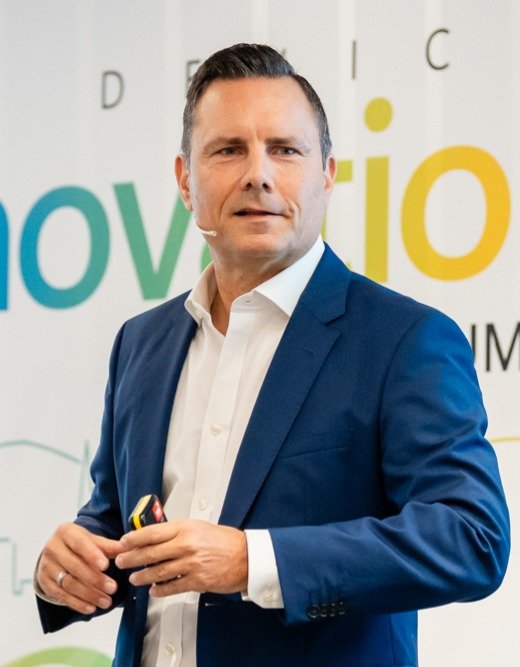
Matthias Scharer

Chief operating officer for Microsoft Device Partner Sales EMEA and strategy and marketing leader for AI and cloud transformation at Microsoft

Matthias is technology executive with 25+ years of experience leading strategic growth, transformation, and innovation across global markets. As COO and Head of Strategy & Marketing for Microsoft Device Partner Sales EMEA, I drive regional execution across Marketing, Category Management, and Operations—accelerating AI adoption, hybrid infrastructure, and next-gen device deployment.

I lead a high-performing organization focused on aligning Microsoft’s investment strategy with customer needs, enabling digital transformation at scale, and unlocking value through intelligent edge and cloud services. Passionate about building future-ready teams, I combine strategic foresight with operational excellence to deliver impact across diverse industries and partner ecosystems.

Previously held senior sales leadership roles at Microsoft and Intel, with deep expertise in enterprise sales, vertical industry transformation, and partner strategy across Europe.

Matthias is hold a master of Engeering – Diploma Civil engineering from the Technical University of Munich and an MBA from Mannheim and ESSEC Business schools as well as a certificate from Insead in Management acceleration program.  

Cecilia Rodriguez

Founding partner and managing director of Sollertia in Argentina

Cecilia is an executive coach and consultant with over 20 years of experience in human behaviour and organizational development. Since founding Sollertia in 2004, she has partnered with more than 600 clients across Latin America and internationally, guiding leaders and organizations through processes of change, growth, and transformation. 

She is also Co-Founder of Avvartes International, a Switzerland-based network that amplifies leadership and organizational evolution programs across 16 countries. 

Certified Executive Coach by the Center for Creative Leadership, she has supported leaders at different organizational levels—CEOs, Presidents, Regional Heads, Vice Presidents, and Directors—across industries such as banking, telecommunications, pharmaceuticals, agribusiness, energy, logistics, and beverages & spirits, in regions from Latin America to the U.S., Europe, and Asia. 

Rooted in experiential learning and inspired by her lifelong connection with mountaineering, Cecilia brings a distinctive perspective to her facilitation and coaching: insight-driven conversations that help leaders unlock clarity, strengthen decision-making, and move forward with focus and confidence. 

She designed the R4G – Resilience for Growth Program with five global colleagues, delivering it for women leaders in open cohorts in the U.S., Europe, Asia and Latin America (2019–2023). From this initiative, “daughters’ programs” were created in-company for SIG (Global), MSD (Latin America) Akbank (Turkey), YPF and Banco Galicia (Argentina).

Christian Neubert

Leader of the Human Edge consulting firm and senior executive and transformational leader

Christian Neubert is a senior executive, transformational leader, and a trusted advisor to C-level executives for major businesses. He is also an expert in cultural transformation. Christian’s interactions with clients are insightful and provocative. He contributes experience from a multitude of countries, in a wide array of industries including pharmaceuticals, technology, banking, and broader life sciences. 

He specialises in defining strategic vision, leading and managing change, and executing to deliver against expected results. Wherever he goes, he cultivates innovation and demonstrates a global perspective, to deliver high performance across multiple cultures and markets. 

Christian’s focus on advanced analytics solutions includes Strategic Workforce Planning, allowing senior leaders to take impactful decisions resulting in more agile organizations for today and in the future. 

He is dedicated to successfully building and enabling organizations to build internal game-changing capabilities that have long-lasting business impact. Christian holds a master’s degree in Organizational Psychology from the University of Freiburg (Germany), and a bachelor’s degree in Economics. In his free time, he spends time with his family and friends, skiing, and traveling around the world. 

What clients can expect from Christian: 

His thoughtful, probing approach coupled with his strong business acumen focuses individuals and teams on the behaviours and actions required to achieve results, whether setting strategic direction, leading transformational change, or achieving exceptional performance.

Devvesh P. Srivastav

Country president and HR director APAC at Centrient Pharmaceuticals in India

Devvesh P has an enriched experienced of three decades in various Global, Regional & Local organizations in People & Business Management across Pan India, Asia, Europe & North America. Been on panel of key industry forums like IGCTC, NIPM, IISPI, OPPI & EFI. A post-graduate in HR Management & Employee Relations, Lawyer by training & Graduate in Tax with Chartered Accountancy Inter.

Devvesh is an inspiring leader who has a proven track record to transform, build, Co create and integrate high performing teams to achieve goals. He is currently based out of Gurgaon, Delhi NCR where he is working as Country President & Global & Regional HR Head for Global Tech Ops and Asia Region and a Board Member, Occupier under the Indian laws on compliance. Before he was working as Head HR & Corporate Services function with a Canadian MNC – Apotex and part of the Global HR Leadership Team having a GCC – Shared Service Centre in Mumbai.

Prior to Centrient & Apotex, he was with Sun Pharma as Corporate & Manufacturing HR Head, he advanced to become the Global HRBP for Sun Pharma with a responsibility of 10,000+ People role and was heading the Formulations business as AVP – HR & Admin. During his stint with Sun Pharma, Devesh has spearheaded the landmark integration of Sun – Ranbaxy & successfully completed the integration of GSK Opiate business of Australia with Sun.

At Teva, he was Sr. VP – HR & Admin and was responsible for the building One Teva – One Team. Previously he played significant role in transforming Merck in India while he was VP – HR & Corp Admin for Merck Group of Companies as HR Head for more than 12 Years. During his stint he has did multiple integration, Merck Millipore, Bangalore Genie & Merck Serono & also worked at Merck HQ in Germany and was responsible for 7 APAC countries in his regional responsibility. In addition to his HR professional exposure, he has successfully established 2 Major CSR Campaign MICT (Merck India Charitable Trust) – Adoption of Talent & IGNITE in Apotex – Initiative for Talent for underprivileged students in BLR & Mumbai and currently supporting a Centrient CSR campaign where he is passionately driving multiple projects touching 60,000+lives every year.

Devvesh P have worked across regions of India and did Global assignment in Germany/Frankfurt and lead South East Asia seven countries in his Regional Roles and exposed to multiple complex projects working with great minds and Organizations like McKinsey , EY, PwC , Bain , KPMG and known for working many business transforming assignment in his tenure and supporting start Up network while awarded as TOP 100 HR Mind , Best 100 HR Leaders, won accolades for his companies in Best Employers study in 2014 and 2018.

Belongs to a defence family background, Wife Mohini, an IT Professional and now a Home Maker & his son Divynsh is a professional Architect.

Certification Programmes & Key Leadership Engagements:

  • Certified trainer for different programs in Leadership & Management Development.
  • Certified trainer for “Insights” a behavioural program by Insights Discovery, Berlin
  • Certified trainer for coaching skills and NLP by David Ross, Performance Unlimited, UK.
  • Certified Assessor for Leadership Profiling by Merck KGaA.
  • Certified for Hogan Assessment – Three Fish
  • Performance Management System IIM – Ahmedabad
  • Certificate Course in “Regional Talent Training” at Singapore/Shanghai/Mumbai
  • Executing Coaching Skills & NLP Techniques – by Performance Unlimited UK
  • Merck Leadership Curriculum Certification – I, II, III & IV
  • 360 degree feedback program – by SHL.
  • Critical skills for Managers – by Andrew Bryant of “Self Leadership”, Singapore.
  • Gold Medallist in “Innovation Workshop” at Frankfurt
  • Persuing his ACC/MCC from Coachraya & ICF

Brigitte Schraetzenstaller-Rauch

Head of organization and administration at Vedra Pension and co founder of Great People Consulting

About Great People
Founded in 2014, Great People brings together a team of highly experienced practitioners with outstanding consulting and coaching qualifications and a proven track record across industries and leadership levels.
The team combines solid business backgrounds with deep human understanding – bridging strategy and people, structure and empathy. With decades of international experience in corporate, SME, and start-up environments, Great People consultants work pragmatically, strategically, and with a deep belief that successful transformation starts with people who feel connected to what they do.

About Brigitte
Brigitte combines systemic coaching and mediation expertise with extensive leadership experience in multinational corporations and start-ups. Her career includes positions at Roche, Oracle, Novartis, and Bilfinger, giving her a profound understanding of organizational dynamics, leadership challenges, and cultural diversity.
As a former Managing Director in the start-up sector, Brigitte brings a hands-on approach to business transformation and organizational development. She supports executives and teams in gaining clarity, aligning strategy and culture, and leading change with confidence and empathy.

Her Focus Areas
Executive Coaching Brigitte coaches C-level leaders, senior managers, and leading professionals to enhance their effectiveness and leadership impact.
Focus topics include:
• First 90 Days onboarding and leadership transition
• Executive Presence and authentic leadership, especially for female senior leaders
• Self-effectiveness, management, and career development strategies

Start-up Consulting
Drawing on her own executive experience in start-up leadership, Brigitte supports founders and early-stage companies in building sustainable structures and growth strategies.
Typical consulting areas:
• Pitch coaching to create compelling, investor-ready presentations
• Business development and Go-to-Market strategies
• Company building and scaling from concept to execution

Executive Consulting & Organizational Development
Brigitte advises organizations in strategy, change, and leadership development, enabling transformation with clarity, empathy, and measurable results.
Key project experience includes:
• Company strategy development and rollout in Healthcare, IT, and Service industries
• Design and global rollout of a Human Resources Strategy in the service sector
• Development and implementation of a “Sales Academy” for an intern. printing company
• Teambuilding and leadership alignment workshops for global finance teams in the
pharmaceutical industry

Global Projects & HR Expertise
Her international project portfolio includes:
• Development of Global HR strategies and implementation of an international Diversity & Inclusion strategy
• Development of Global Leadership Programs for multinational organizations
• HR Interim Management for a leading pharmaceutical company – including business
partnering with global business units and facilitating change management & coaching skill workshops for leadership teams

Facilitation & Events
Her passion lies in inspiring groups, fostering active and interactive collaboration, and creating lasting impact.
• Facilitates engagement from small teams to large organizations, ensuring every
participant is involved
• Designs and leads kickoffs, trainings, and bootcamps that spark creativity and
collaboration
• Creates experiences that leave participants inspired, motivated, and talk about the impact years later

In a nutshell
Brigitte is a pragmatic, inspiring, and results-driven consultant – credible in the
boardroom,empathetic in personal interaction, and deeply committed to sustainable
transformation.
She believes that organizations thrive when people are aligned, motivated, and connected.

Alexandra Zhao

Senior Consultant of Zhonglun W&D Law Firm. Visiting scholar of Columbia Law School 2025-2026

Ping ZHAO (Alexandra) is a Senior Consultant at Zhonglun W&D Law Firm and a Visiting Scholar at Columbia Law School. With over twenty years of experience spanning the judiciary, corporate, and private practice sectors, she has gained extensive experience advising multinational corporations on international arbitration, cross-border mergers and acquisitions, and global trade compliance.

Before entering private practice, Ms. Zhao served as Global Risk and Compliance Director and China Legal Head at Centrient Pharmaceuticals, a Bain Capital portfolio company headquartered in Rotterdam, the Netherlands, where she established comprehensive global compliance frameworks covering anti-corruption, export controls, ESG, and data privacy. Earlier, she was Senior Legal Counsel at China National Offshore Oil Corporation (CNOOC), managing complex international disputes and investment arbitration cases across the United States, the United Kingdom, and Africa.

Ms. Zhao began her legal career as a judge assistant at the Beijing Haidian District Court and was later promoted to Acting Judge. She also worked with The Asia Foundation on legal reform initiatives in China. She currently serves as Vice Secretary-General of the China International Investment Arbitration Forum and Director of the China Modern Enterprise Research Association.

She holds an LL.M. in Commercial Law from the University of Bristol, an MBA from Tsinghua University, and a B.A. in English from the China University of Political Science and Law.